
How to Plan a Weekend Getaway Without the Burnout
Discover how to plan a weekend getaway that's relaxing, not rushed. Our guide offers practical tips to avoid burnout and create a memorable short trip.
Here’s the truth: a good weekend getaway is about minimizing travel time and maximizing your actual experience. The trick is to pick a spot within a 3-4 hour travel radius, build your plans around one walkable neighborhood, and book only your stay and one great dinner ahead of time. This leaves room for what travel is actually about.
Why is Smart Planning More Important Than Ever?
Let's get one thing straight: planning isn't about killing spontaneity. It’s about protecting your time and money from the chaos that tanks a short trip. I learned this the hard way on a weekend in Lisbon, blowing half a day just figuring out the tram system to get from one overhyped spot to another. It was a classic rookie mistake.
The travel trend is clear: more people are swapping long vacations for shorter getaways. But with the average U.S. household summer vacation budget around $2,867, one poorly planned weekend can easily burn through 20–30% of a family’s annual leisure budget. As travel industry analysis shows, rising costs mean efficient planning isn't a suggestion; it's a financial necessity.
The goal is to make smart decisions before you go, so you can make spontaneous ones when you’re there. A solid framework frees you up to wander, not panic.
This guide isn’t another list of "must-see" attractions. It’s a practical framework for planning a weekend that feels restorative, not rushed. We’ll cover everything from choosing a destination that respects your limited time to building an itinerary that actually feels like a break.
We'll even touch on some of the best vacation planning apps that can handle the tedious parts for you. It’s all about getting the logistics right so the trip can finally be about the trip. This kind of decision fatigue is exactly what the WanderAssist 60-second planner was built to solve.
How Do I Choose a Destination That Respects My Time and Budget?
Analysis paralysis is real. We've all been there—endlessly scrolling, trying to find that perfect spot, and watching motivation drain away. Let's cut through the noise. The best destination for a weekend trip is a simple equation of time, money, and what you actually want to get out of it.
Start by asking yourself three honest questions:
- How long am I willing to be in transit? A four-hour trip each way is my personal max for a weekend. Any longer, and you spend more time getting there than being there.
- What’s my real, all-in budget? Factor in lodging, food, gas, and activities before you even start looking at hotels. Honesty here prevents headaches later.
- What's the goal? Do you want to return feeling energized from a city break, recharged from a quiet cabin, or inspired by seeing something new?
Last year, I chose a weekend in Seville over Barcelona for exactly these reasons. I saved nearly 40% on costs and got the same feeling of exploring a historic Spanish city—just without the massive crowds and the sound of Vespa traffic everywhere. It didn't feel like a compromise; it felt like a smarter trip.
This breakdown shows where to focus your limited planning time to get the biggest payoff.

The sweet spot is clear: stick to a destination within a 3-4 hour travel radius, then lock in a couple of key bookings. Don't overcomplicate it.
How Can I Find Value Without Sacrificing the Experience?
One of the smartest moves you can make is to look at "second-tier" cities. These are places that deliver a similar vibe to the big-name destinations but for a fraction of the cost and hassle. You still get great architecture and a good food scene, just without the peak-season price gouging.
For instance, an industry report found that hotels in Boston are, on average, 27% cheaper than in New York City. Similarly, Seville is roughly 38% less costly than Barcelona, even though both pairs offer an urban escape. For a short getaway, choosing a place with 20–40% lower lodging costs is a huge win. You can dig deeper into these numbers in this full report on American travel trends.
This exact problem—too many options and not enough clarity—is why tools like the WanderAssist 60-second planner are useful. It helps you skip the endless search and jump right to what's practical and fun.
The WanderAssist Reality Check
Let's get real for a minute. A quick look at average costs for a two-night stay with meals shows just how much you can save by thinking outside the box. This isn't about which city is "better," but which one is smarter for your wallet on a short trip.
Price Warning: Weekend Getaway Cost Comparison
| Primary City | Average Weekend Cost | Alternative City | Average Weekend Cost | Potential Savings |
|---|---|---|---|---|
| New York City | $950 | Boston | $690 | ~27% |
| Barcelona | $780 | Seville | $485 | ~38% |
| London | $820 | Manchester | $550 | ~33% |
| San Francisco | $1,050 | Portland | $720 | ~31% |
Note: These are estimates for two nights in a mid-range hotel plus average daily food expenses.
The numbers don’t lie. Swapping a major hub for a compelling alternative can easily save you hundreds of dollars. That’s money you can put toward a standout meal or a unique local tour. The goal is to maximize the experience, not just tick a famous city off a list.
How Do I Build an Itinerary That Is Actually Fun?
Let’s be honest: most travel itineraries are just glorified to-do lists. They’re exhausting and feel more like a race against the clock than a relaxing getaway. We're going to build a schedule that leaves room for spontaneity.
The single best strategy for this is Neighborhood Anchoring.
Instead of zig-zagging across a city, you group your activities into one walkable area for a morning or afternoon. I did this on my last trip to Rome—spent an entire morning just in Trastevere. I hit the market, popped into a small church, and had a long, leisurely coffee. It felt way more rewarding than rushing between three major sites across the city. This one trick eliminates wasted transit time and kills that "what's next?" decision fatigue.
Use Anchor Activities and Linger Zones
To put this into practice, think about your 48-hour plan in two parts: "anchor activities" and "linger zones."
- Anchor Activity: Your one non-negotiable for an area. Maybe it's a museum visit, a reservation at a specific restaurant, or a hike to a viewpoint. You book this or plan your timing around it.
- Linger Zone: The unstructured time you build around your anchor. It could be a nearby park, a cool-looking market, or a street lined with cafes where you can just wander and soak up the local vibe without a strict agenda.
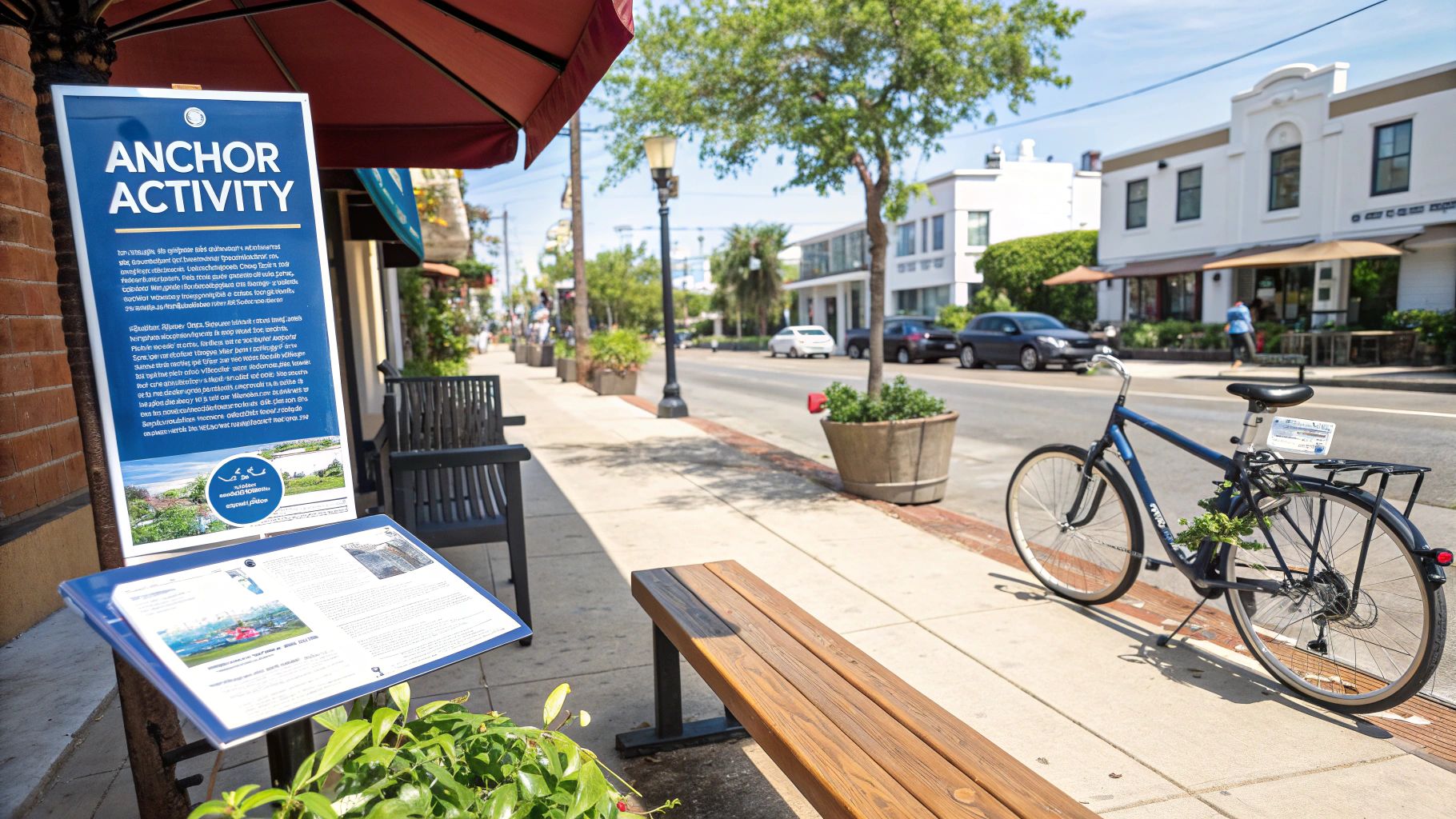
Here's a real-world example: say your anchor is a 10 AM ticket for the Rijksmuseum in Amsterdam. Your linger zone is the Vondelpark right next to it. Instead of racing off to another district after the museum, you grab a snack, find a bench, and just exist for an hour. This gives your day focus without making it feel rigid.
If you want to get into the nuts and bolts of this, we have a whole guide on how to create a travel itinerary that feels both structured and flexible.
Timing Tip: Master Temporal Logic to Beat the Crowds
Just as important as where you go is when you go. Visiting a popular landmark at 9 AM versus 1 PM is a completely different experience. The goal is to arrange your schedule to sidestep the worst of the crowds and that midday energy slump.
A great itinerary isn't about seeing more; it's about experiencing things at the right time. An early morning market has a completely different energy—the smell of fresh bread, the sound of vendors setting up—than that same spot at noon when it's just a sea of selfie sticks.
Here’s a simple way to apply this:
- The Morning Swap: Hit your biggest, most popular "anchor" first thing in the morning, right when it opens. Be the first one through the doors.
- The Afternoon Retreat: Use the early afternoon (1 PM to 4 PM), when crowds and heat are at their peak, for your "linger zone." This is the perfect time for a long lunch or exploring quiet side streets.
- The Evening Vibe: Save atmospheric walks or less-crowded spots for the evening. The light is better, and most day-trippers have gone home.
By pairing neighborhood anchoring with smart timing, you’re not just making a list of things to see. You're designing a better, less stressful experience.
What Should I Book Now and What Can I Decide Later?
<iframe width="100%" style="aspect-ratio: 16 / 9;" src="https://www.youtube.com/embed/bQlfX3nHUWU" frameborder="0" allow="autoplay; encrypted-media" allowfullscreen></iframe>The number one reason weekend trips feel rushed? The fear of missing out. The secret is knowing what to lock down ahead of time and what to leave to chance.
Your non-negotiables are simple: how you’ll get there and where you’ll sleep. Flights and lodging are the structural beams of your trip. Get those booked, and you’ve won half the battle. Everything else can fall into place.
Secure Your Anchors Early
Once your transport and accommodation are sorted, it’s time for a couple of strategic bookings. This isn’t about cramming your schedule full; it's about making sure you don't miss the one or two experiences that inspired the trip.
So, what counts as an anchor?
- A reservation at that one restaurant you’ve been dying to try.
- A timed-entry ticket for a major museum notorious for two-hour lines.
- A seat at a specific show or performance.
I learned this the hard way trying to get into a famous tapas bar in Madrid on a Saturday night. Without a reservation, the host just laughed—the wait was over three hours. We ended up at a generic tourist spot nearby. One simple booking would have changed the vibe of our night.
How Do Event-Driven Trips Change the Rules?
If your getaway is built around a specific event—like a music festival or a big game—the booking strategy shifts. These events create massive spikes in demand.
For example, data revealed the F1 Singapore Grand Prix weekend caused a 30% week-over-week spike in travel searches. Planning for the Ryder Cup jumped 50% WoW. When you see search volume surge like that, you know prices for everything are about to follow. For these kinds of trips, you need to book your key anchors at least 3–4 weeks ahead. You can dig into more of these Q3 2025 travel trends to see how events impact planning.
By locking in just a few key elements—your stay, your travel, and maybe one great meal—you eliminate the biggest sources of in-trip stress. This frees up your mental energy to actually enjoy your surroundings.
Figuring out which anchors to book can feel like a chore. It’s this kind of decision fatigue that the WanderAssist 60-second planner is designed to eliminate. It helps you focus on what truly needs to be booked now, so you can relax later.
What Final Sanity Checks Should I Do Before I Leave?
You’ve done the heavy lifting—the destination is chosen, the itinerary is sketched out. Now it’s time for the final details that make the difference between a smooth departure and a frantic scramble. Let's get everything buttoned up so you can walk out the door feeling at ease.
Sort Out Your Digital Ducks in a Row
The day before you head out, take 10 minutes to get your phone ready. This small bit of digital prep has saved me from some serious headaches.
- Offline Maps are Non-Negotiable: Download the map of your main neighborhood. You can't always count on a solid Wi-Fi signal when you’re lost.
- Wallet Your Tickets: Move your flight, train, or event tickets into your phone's digital wallet. It’s faster than fumbling through emails at a crowded gate.
- Share Your Itinerary: A quick text with your hotel address and travel details to a friend or family member is always a good idea. It’s a simple safety net.
Always Have a 'Bad Weather' Backup
A sudden downpour can derail a perfectly planned afternoon. I learned this in Amsterdam once. A surprise storm had everyone else huddling under awnings, but we just ducked into a quirky little museum we’d already earmarked as our "just-in-case" spot.
So, for each day, have at least one solid indoor backup plan in your anchor neighborhood.
A great backup isn't complicated. Think of a cozy cafe with board games, a small art gallery, or an indie cinema. It can turn a washout into an unexpected highlight.
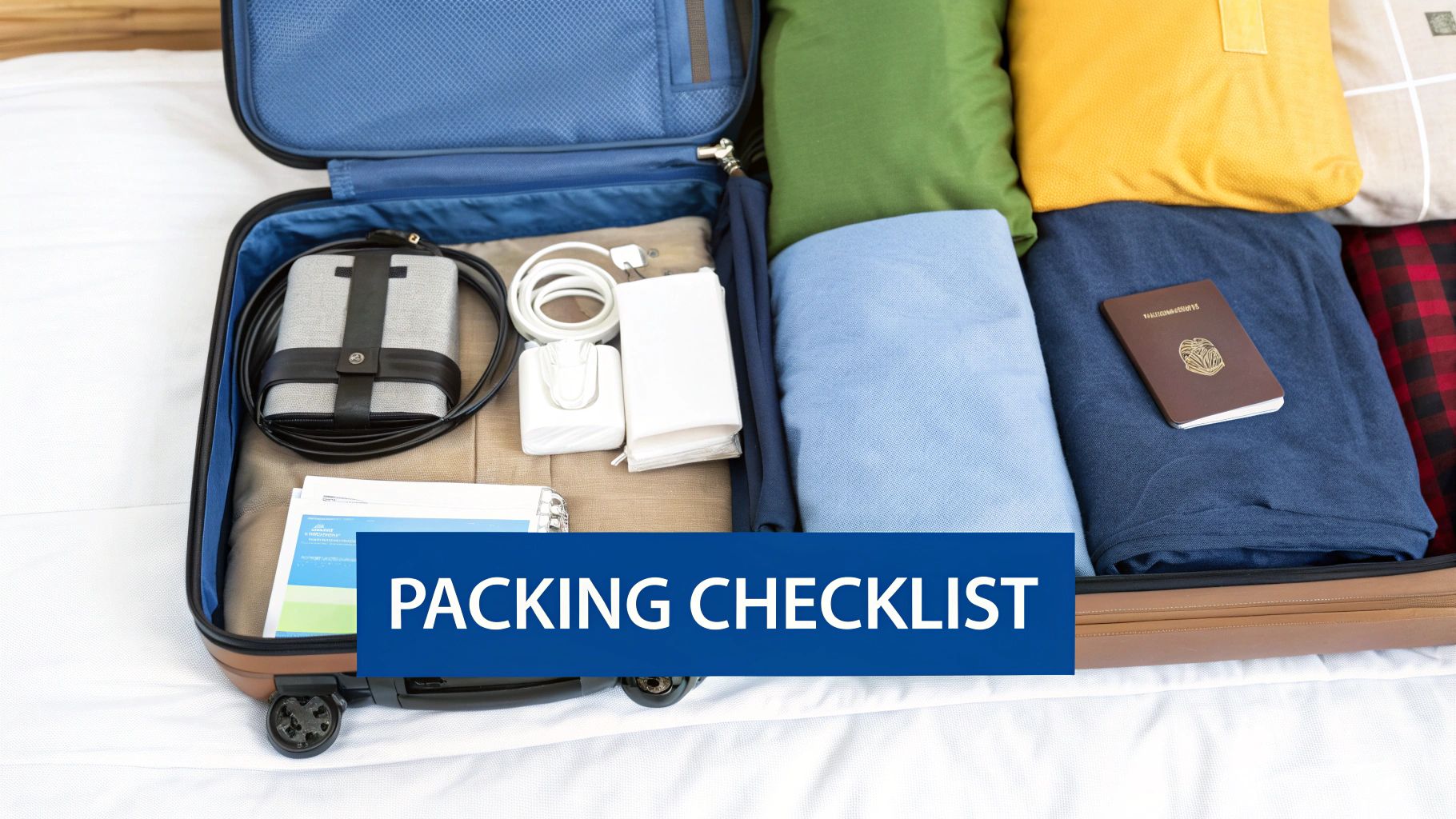
The Art of Packing Light
For a weekend trip, overpacking is the enemy. You want to be mobile, not weighed down by things you'll never use. Stick to a core list of essentials.
Here's a battle-tested checklist to keep you focused.
The Only Weekend Packing List You Need
| Item | City Break (Quantity) | Nature Escape (Quantity) | Notes |
|---|---|---|---|
| Tops | 2-3 (mix of casual/dressy) | 2-3 (layers, moisture-wicking) | Choose versatile pieces you can layer. |
| Bottoms | 1-2 (e.g., jeans, trousers) | 1-2 (hiking pants, comfy pair) | One pair worn on the travel day. |
| Outerwear | 1 (stylish jacket or coat) | 1 (rainproof/windproof jacket) | Check the forecast! |
| Shoes | 2 (comfortable walkers, dressier pair) | 2 (hiking boots, camp shoes) | Wear the bulkiest pair. |
| Underwear/Socks | 3 sets | 3 sets | An extra pair of socks is always smart. |
| Toiletries | Travel-size essentials | Travel-size essentials | Toothbrush, toothpaste, deodorant, etc. |
| Meds/First Aid | Personal meds, basic kit | Personal meds, blister care | Don't forget pain relievers. |
| Electronics | Phone, charger, power bank | Phone, power bank, headlamp | A power bank is your best friend. |
This minimalist approach forces you to pack smart. Once these final checks are done, you’re officially ready. Time to lock up, head out, and enjoy the weekend.
Still Have Questions?
Even the best-laid plans can leave you with a few "what ifs." Here are straight-up answers to the questions I get asked most often.
How Far Out Should I Book a Weekend Trip?
For a typical weekend, the sweet spot is 4 to 6 weeks ahead. This gives you the best shot at decent prices for flights and lodging before they start to climb.
But if you're eyeing a holiday weekend or a city that's hosting a big festival, you need to be thinking more like 8 to 12 weeks in advance. My advice? Once you find a price you can live with for your flight and hotel, book it. Don't hesitate, because it probably won't be there tomorrow.
What's the Single Biggest Mistake People Make?
Hands down, it's over-scheduling. I see it all the time: people try to cram a week's worth of sightseeing into 48 hours and end up completely drained. The solution is "neighborhood anchoring." Instead of crisscrossing the city to tick off a list, pick one or two neighborhoods and really dive in. You'll experience more and actually enjoy yourself.
A weekend trip should feel like a deep breath, not a sprint. The whole point is to come back recharged, not like you need another vacation.
Should I Skimp on the Hotel or Activities?
For a short trip, my money is always on spending a little more for a well-located hotel. A central home base saves a huge amount of time, energy, and transportation money. On a quick getaway, time is your most precious currency. You can easily make up for the extra lodging cost by mixing in free activities like exploring a park or wandering through a local market.
Feeling that pre-trip planning burnout already? I get it. The WanderAssist 60-second planner is built to help you sidestep these common traps. It will give you a smart, realistic itinerary without you spending hours glued to a screen.
Start planning your perfect weekend getaway with WanderAssist.