
Your First Guide to Creating a Personalized Travel Itinerary

Ditch the generic guides. Learn how to craft a personalized travel itinerary that matches your unique style and helps you experience a destination like a local.
Planning your first big trip can feel overwhelming, but it doesn't have to be complicated. A personalized travel itinerary is simply a travel plan built around you—what you love, how you like to move, and what you actually want to get out of your trip. It’s the key to experiencing a new city like you belong there, instead of just passing through.
Moving Beyond One-Size-Fits-All Travel Plans

Have you ever seen friends come back from a trip feeling like they just ran through a checklist of famous sights? It’s a classic first-timer mistake. You see the landmarks, snap the same photos as everyone else, but you leave without ever feeling the real pulse of the place.
That’s the main problem with generic, pre-packaged plans. They often lead to:
- Rushed Schedules: Trying to cram too many famous attractions into one day leaves you more exhausted than inspired.
- Crowded Landmarks: You end up spending more of your precious vacation time waiting in line than soaking in the experience you traveled so far to see.
- A Disconnected Feeling: The itinerary completely misses the quiet neighborhood cafes, local markets, and quirky shops that truly give a destination its soul.
The Shift Toward Authentic Experiences
Thankfully, travel is changing. The demand for truly personal trips has skyrocketed. A recent forecast found that 74% of travelers want their plans to be a genuine reflection of who they are. This trend, highlighted in Booking.com's travel forecast, shows that we're all looking for something more meaningful.
We’re prioritizing real moments over just checking boxes off a list.
This new mindset is about trading the frantic hustle for a chance to connect with a place and feel like a local. It's about crafting a trip that mirrors your passions, whether that means hunting down the best street food, wandering through a quiet neighborhood, or simply sipping a coffee in a park where the locals hang out.
A great trip shouldn’t feel like a chore. It should feel like an adventure that was designed just for you—because it was.
Building a personalized travel itinerary is your first step toward making that happen. It turns planning from a dreaded task into the exciting start of your journey, guaranteeing your vacation leaves you recharged and full of unique stories.
This guide will walk you through exactly how to do it, step-by-step.
1. What's Your Personal Travel Style?
Before you even think about booking a flight or a hotel, the first—and most important—step is figuring out what a "perfect trip" actually looks like for you. It’s easy to get swept up in top-ten lists and what everyone else is doing, but a great trip starts with knowing yourself. This is the foundation for an itinerary that leaves you feeling energized, not exhausted.
So, what really gets you excited? Do you love the energy of a bustling street market, or do you prefer finding a quiet corner in a cozy cafe? There's no right answer. The goal is just to get honest with yourself before the planning begins.
Find Your Trip’s “North Star”
A vague idea like "I want to go to Lisbon" isn't a plan; it's a starting point. To give your trip real direction, you need a mission. Think of it as your North Star—a simple, guiding statement that helps you make decisions. This tiny shift in focus turns a generic vacation into a personal quest.
Here are a few examples of what this looks like for a single destination:
- The Foodie: "My mission is to find Lisbon's most authentic food, from tiny family-run restaurants to neighborhood pastry shops."
- The History Buff: "I want to explore the oldest neighborhoods in Rome and imagine what life was like centuries ago."
- The Art Lover: "I'm going to Florence to soak in the art, seeing the big masterpieces but also finding cool street art."
When you have a clear mission, every choice becomes easier. You'll know which activities to focus on and which ones you can happily skip, no matter how popular they are.
To help with this, let's break down a few common traveler types. See which one sounds most like you.
What Kind of Traveler Are You?
A simple guide to help you identify your travel personality and the kinds of local experiences you might enjoy.
| Traveler Type | Core Desire | Example Local Activities |
|---|---|---|
| The Adventurer | Thrills & Action | Hiking a trail just outside the city, taking a surfing lesson, or renting a bike to explore. |
| The Culturalist | Immersion & History | Museum hopping, exploring old neighborhoods, attending a traditional music performance. |
| The Foodie | Flavor & Culinary Arts | Taking a cooking class, visiting a local food market, hunting for the best street food. |
| The Relaxer | Peace & Rejuvenation | Long, leisurely meals, beach lounging, reading a book in a local park. |
| The Socialite | Connection & Nightlife | Finding a local pub with live music, joining a walking tour, attending a neighborhood festival. |
Of course, you're probably a mix of these! But identifying your dominant style helps you prioritize what truly matters.
Set a Pace That Feels Right
One of the biggest mistakes new travelers make is trying to do too much. The fear of missing out (FOMO) is real, and it leads to a frantic, checklist-style trip that leaves you needing a vacation from your vacation. The secret to avoiding burnout is to choose a schedule that fits your natural energy level.
So, which of these sounds most like you?
- Packed: You're an early bird who thrives on action. Your ideal day is filled with three or four main activities, and you're happy to go from dawn till dusk.
- Balanced: You like a good mix of sightseeing and free time. You'll plan for one or two main attractions each day, leaving space for wandering and stumbling upon cool spots.
- Relaxed: For you, a vacation is a chance to unwind. You might focus on just one main thing per day, prioritizing long coffee breaks and simply soaking in the atmosphere.
Remember, this isn't about how much you can cram in. It's about designing a trip that recharges you. Honesty about your own pace is the single best way to ensure you come home feeling refreshed, not drained.
Once you’ve figured out your mission and your pace, you have the building blocks for a truly personal itinerary. Now you're ready to start filling in the details.
Crafting a Travel Itinerary That Actually Flows
Alright, you know what kind of trip you want. Now for the fun part: turning those ideas into a practical, day-by-day plan. This is where you build the blueprint for your adventure, creating a personalized travel itinerary that feels less like a strict schedule and more like a helpful guide for your days.
The goal isn't to plan every second. It's about creating a natural rhythm for your trip that leaves room for discovery.
One of the biggest mistakes travelers make is zig-zagging across a city, wasting precious hours on buses and trains. The secret to a smooth trip is simple: group your activities by location. Dedicate each day, or even half-day, to exploring one specific neighborhood. This strategy alone will save you so much time and energy, letting you truly soak in the vibe of each area instead of just passing through.
This is how your early planning—your goals and travel style—directly shapes your daily schedule.
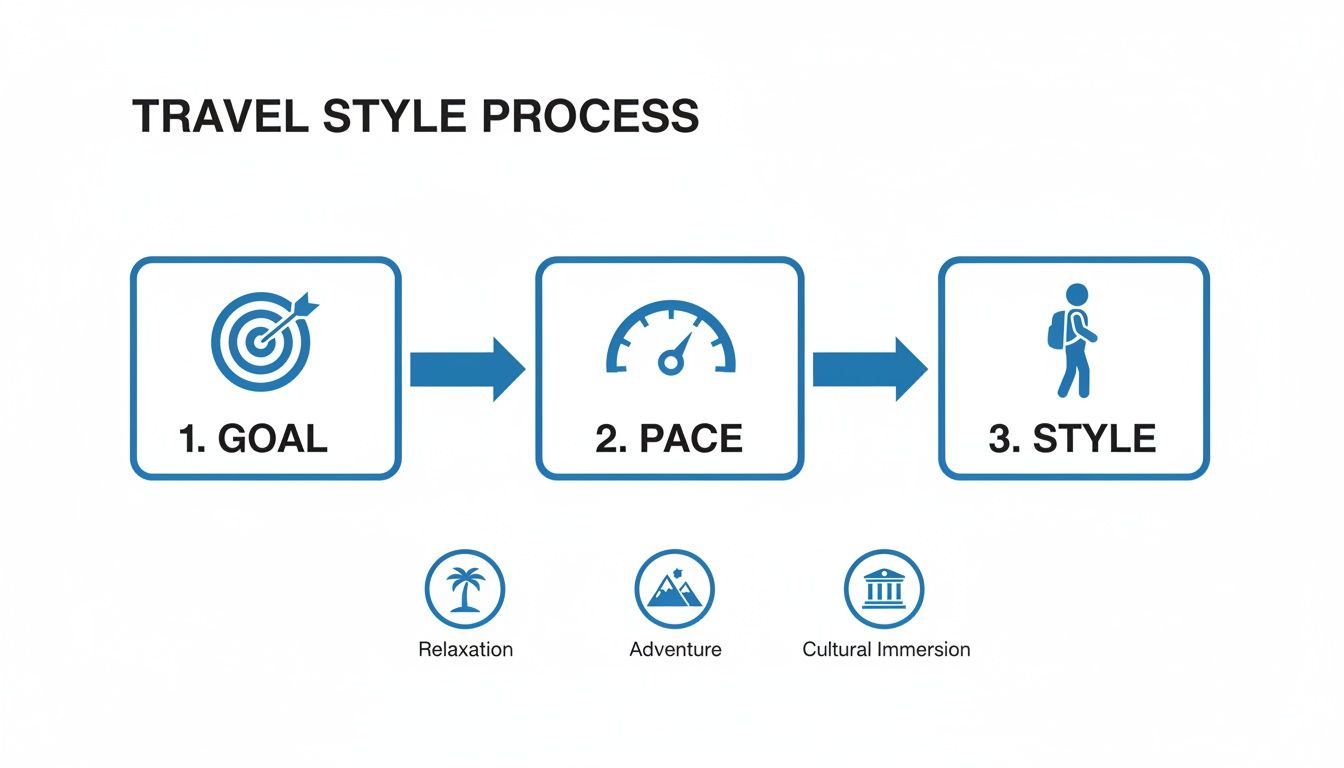
When you know your mission and your pace, building a logical daily flow becomes easy.
Think in Time Blocks, Not Timestamps
Forget minute-by-minute scheduling. Instead, break your days into three simple blocks: morning, afternoon, and evening. This gives you a solid framework without making you feel trapped, which is perfect if you want some direction but also crave the freedom to wander.
Assign one neighborhood or a cluster of nearby sights to each block.
Let's take a "Balanced" traveler in Rome as an example. Here’s how you could structure a day to feel like a local:
- Morning: Tackle the big stuff first. Head to the ancient heart of the city to see the Colosseum and the Roman Forum, which are right next to each other. Get there early to beat the crowds.
- Afternoon: After the ancient wonders, wander over to the adjacent Monti neighborhood. It's the perfect spot to find a small trattoria for lunch, browse some artisan shops, and just relax with a gelato in a quiet square. This is your built-in downtime.
- Evening: As the sun sets, stay in the same area. Find a local bar for a pre-dinner drink (an aperitivo) before settling in for a classic Roman dinner in a restaurant filled with locals, not just tourists.
See how the day flows? There's no frantic subway ride across town. It's a seamless transition from a world-famous landmark to a charming local neighborhood. You end up spending your energy on experiences, not on commuting.
A great itinerary is like a good story; it has a clear beginning, middle, and end. Each day should feel connected, creating a satisfying narrative for your trip rather than a random collection of activities.
Mastering the Art of Pacing and "Planned Spontaneity"
Once you start slotting activities into your morning, afternoon, and evening blocks, it's time to layer in the practical details—and, most importantly, some breathing room. A truly personalized travel itinerary is as much about what you don't plan as what you do.
- Always Check the Hours: Before you lock in a day's plan, do a quick check. Are the museums open? Is it a market day? Does that restaurant you're eyeing require a reservation? A simple detail, like a museum being closed on Mondays, can force you to rethink your entire day.
- Schedule "Do Nothing" Time: This is the best tip for new planners. Intentionally block out a couple of hours with no specific plans. Label it "get lost" or "find a good coffee shop." This is where the real magic happens. It’s when you stumble upon a hidden courtyard or strike up a conversation with a local.
- Sync with the Local Rhythm: Some neighborhoods are dead in the morning but come alive at night. A little research helps you show up at the right time, whether it's for a bustling morning food market or a plaza filled with people in the evening.
Building your plan this way turns it from a stressful to-do list into an exciting roadmap. And if you want to make this even easier, modern tools can do a lot of the heavy lifting. For example, when you use the planner at WanderAssist to create a custom plan, it automatically groups activities by location to create that logical flow for you. That's the real secret to a trip that feels both perfectly organized and wonderfully spontaneous.
Finding Hidden Gems the Guidebooks Miss

You’ve got the bones of your itinerary in place. Now for the really fun part—sprinkling in those unique experiences that make a trip truly yours. This is where we go beyond the big-name landmarks to find the real heart of a place and live like a local. The secret isn't some ancient map; it's just knowing where to look.
Forget generic searches like “best food in Florence.” Get more specific. Try searching for “local favorite restaurants Trastevere Rome” or “best coffee shop for locals in Lisbon.” A simple tweak like that tells search engines you’re after authenticity, not just the place with the most tourist reviews.
Digging Deeper with Modern Tools
Your phone is the best discovery tool you have. Take Instagram, for example. It’s way more than just photos—it's a real-time visual guide. Use the location tag feature to see what real people are posting in a neighborhood you plan to visit. It’s how you can find incredible little bakeries, quirky shops, and quiet parks that never show up in any official guide.
Local blogs and niche travel sites are also goldmines. These are usually run by people who actually live there and are excited to share their city’s secrets. For more ideas on using these digital tools, we’ve got some great travel planning articles over on our blog.
The goal here isn't to schedule every second, but to build a list of interesting spots that fit your vibe. That way, when you have free time, you have a pool of unique options to choose from.
True travel magic isn’t found in a top-ten list; it’s discovered down a quiet side street you chose to explore on a whim. Building a great personalized travel itinerary means making time for those discoveries.
Balancing Landmarks with Local Life
Look, you don't have to skip the Eiffel Tower or the Colosseum on your first trip. It’s all about finding a healthy balance. The best strategy is to pair one major landmark with a few smaller, local discoveries each day.
Here’s how that might play out:
- Morning: Go see that must-see museum or monument you’ve been dreaming about. Get it done early.
- Afternoon: Wander into a nearby residential neighborhood and find a small, family-run spot for lunch.
- Late Afternoon: Grab a coffee and spend an hour in a community park, just watching the city’s daily life unfold around you.
This approach gives you the best of both worlds. You get to see the famous places while also connecting with the genuine, everyday culture of your destination.
This shift away from cookie-cutter trips is a huge trend. In fact, the market for personalized travel is exploding, with projections showing it will reach USD 317.4 billion by 2029. That incredible growth just proves how much travelers now value authentic adventures over generic tours. This is how you create a personalized travel itinerary that feels like it was made just for you—filled with stories no one else will have.
Using Modern Tools to Simplify Your Planning
<iframe width="100%" style="aspect-ratio: 16 / 9;" src="https://www.youtube.com/embed/HFWgThplaLw" frameborder="0" allow="autoplay; encrypted-media" allowfullscreen></iframe>Let’s be honest, planning your first trip shouldn't feel like a second job. For years, we were stuck with spreadsheets and clunky documents—they worked, but they were a nightmare to use on the go. Trying to copy and paste addresses and picture a route was a huge headache.
Thankfully, we've moved way past that. The mobile travel app market is expected to surge from US$ 1 trillion in 2025 to US$ 3.5 trillion by 2033, which shows how much we all lean on our phones for smarter travel. You can dive deeper into the growth of mobile travel apps on datainsightsconsultancy.com.
From Spreadsheets to Smart Schedules
The real game-changer has been dedicated planning apps. These tools can take your jumbled list of ideas and instantly turn them into a smart, map-based schedule. Instead of just listing places, these apps understand geography. They'll automatically group your must-see spots by neighborhood, which is a lifesaver—it stops you from making that classic rookie mistake of zig-zagging across a city all day.
This makes creating a personalized travel itinerary feel easy and intuitive for everyone, especially if you're new to planning. You just drop in your ideas, and the app builds a logical, day-by-day flow for you.
The biggest win with modern tools isn't just about being organized—it's about the built-in intelligence. They solve the logistical puzzles for you, so you can get back to the fun part: looking forward to your trip.
Planning That Moves with You
One of the biggest problems with old-school planning methods is how rigid they are. A printed-out spreadsheet doesn't care if you stumble upon a cool cafe or decide to spend an extra hour at the museum. Digital itineraries, on the other hand, live on your phone, making them incredibly flexible.
- Adjust on the fly: Feel like swapping that afternoon museum for a walk in the park? It's as simple as dragging and dropping.
- Easy collaboration: Traveling with friends or family? Just send them a link so everyone is on the same page.
- All-in-one access: Your schedule, confirmation numbers, and random notes are all in one spot, ready whenever you need them.
Tools like an AI travel planner take this even further, turning what used to be hours of tedious research into a few quick clicks. It gives you the power to build a smart, well-paced plan that’s truly yours, so you can spend less time stressing and more time enjoying the adventure.
Got Questions? Let's Talk Trip Planning
Even with the best tools, a few questions always pop up when you're planning your first big trip. It’s completely normal. Let’s tackle some of the most common hurdles new travelers face when they’re trying to build a great personalized travel itinerary.
My goal is to give you the confidence to lock in your plans so you can get back to the fun part—daydreaming about your trip.
How Detailed Should I Get with My Itinerary?
This comes down to your personal style, but a great starting point is to block out rough ideas for the morning, afternoon, and evening. This gives you a sense of direction for the day without chaining you to a rigid, minute-by-minute schedule.
Think of it as a helpful guide, not a strict set of rules. You’ll know you want to explore a specific neighborhood in the morning, for example, but you'll have the freedom to linger over a coffee or wander down an interesting-looking street without feeling like you've "fallen behind." It’s all about creating structure that still has room for spontaneous moments.
A good itinerary guides you; it doesn't control you. The best travel memories often come from those little unplanned moments of discovery.
What's the Biggest Mistake First-Time Planners Make?
Oh, this one is easy. Without a doubt, it’s trying to do and see everything. Over-scheduling is the quickest way to turn a dream vacation into an exhausting chore. It's so tempting to create a massive checklist of sights, but you'll just end up burned out and rushing from one place to the next.
Always build downtime into your schedule. A great plan values the quality of your experiences far more than the quantity. Be honest with yourself about what you can comfortably do in a single day. Trust me, sometimes the best part of a trip is the unplanned hour you spend just people-watching from a park bench.
How Can I Make My Trip Feel Less Touristy?
The secret is to focus on depth, not breadth. Instead of racing across a huge city to see five famous landmarks in one day, pick one or two neighborhoods and really get to know them. This is how you start to feel the actual rhythm of a place.
- Walk a few blocks away from the main attraction. The best cafes, shops, and restaurants are rarely right next to the biggest tourist spots.
- Find a local market. See where residents actually buy their food, and grab an amazing, casual lunch from a food stall.
- Hang out in a neighborhood park. Spend an hour where local families and friends relax. It’s a simple but powerful way to feel connected to a place.
When you balance one "must-see" landmark with a few of these smaller, local experiences, your entire trip will feel so much more authentic and personal.
Ready to build a smart, personalized itinerary without the headache? WanderAssist uses AI to create a perfectly paced, day-by-day plan for your trip in under 60 seconds. Stop stressing and start exploring. Try it for free at https://wanderassist.com.
Article created using Outrank